


Your development queue contains a broken form, a requested page component, and a migration that nobody wants to rush. An AI coding agent may help with all three, but they should not receive the same level of autonomy.
An AI coding agent can inspect a codebase, make changes, and use development tools across a multi-step task. It can reduce some implementation work. It cannot independently establish your business requirements, accept risk on your behalf, or demonstrate that an untested customer journey works. Delegate tasks with clear boundaries and retain responsibility for acceptance.
Key Takeaways
- Start with tasks that have observable expected results and a limited area of change.
- Give an agent the relevant repository context, acceptance criteria, and test setup before asking it to implement a fix.
- Measure the accepted result and review effort, not the amount of generated code.
- Keep production access separate from routine development work and require an explicit release decision.
- A completed tool run is not evidence that a business requirement has passed.
What Can an AI Coding Agent Actually Do?
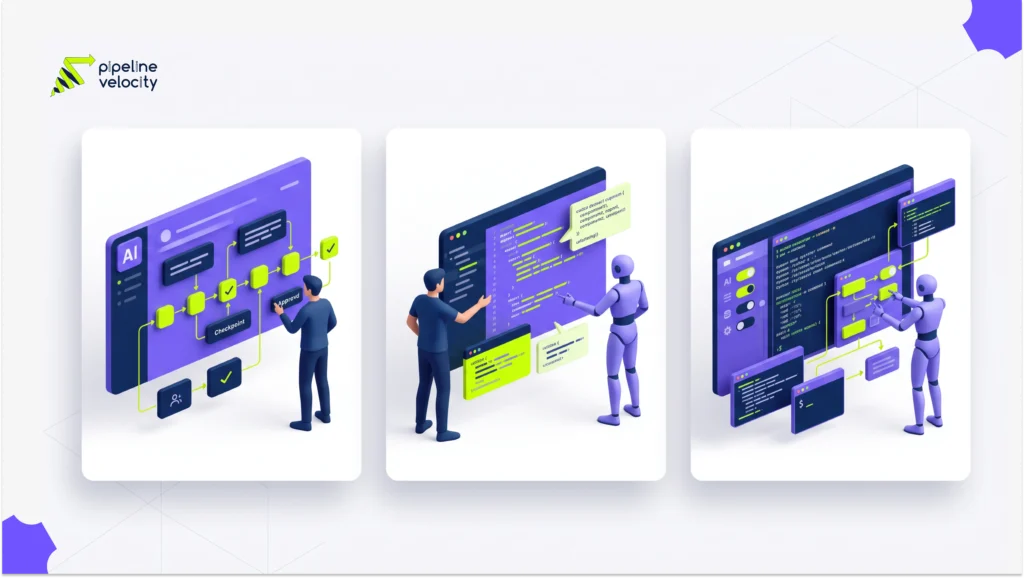
An AI coding agent can coordinate actions around a development objective, rather than simply returning a suggested code snippet. Its actual reach depends on the product, configuration, and permissions you provide.
For example, the Claude Code overview describes working with codebases, editing files, and running commands. These capabilities can support investigation, implementation, and verification within a task. They do not mean the tool automatically understands your company’s rules or has tested every relevant condition.
Think of the agent as operating within an assigned environment. If it cannot access a required service, it may be unable to complete an integration test. If it lacks an acceptance criterion, it may solve a narrower problem than you intended.
A useful completion report should distinguish what changed, what was checked, and what remains unknown. That gives the reviewer evidence to assess instead of asking them to trust the agent’s confidence.
Which Website Tasks Are Good Candidates?
Begin with bounded, reversible work whose expected behavior can be independently checked. The following table is a suggested pilot framework, not a product capability guarantee.
| Task | Useful Agent Contribution | Evidence Before Acceptance |
| Fix a reproducible form error | Locate the cause and propose a focused change | The failing case now passes and valid submissions still work. |
| Build an approved component | Implement the documented states and layout | Desktop, mobile, keyboard, and error states match the brief. |
| Add tests around existing behavior | Draft tests and identify missing setup | A reviewer confirms the tests express the intended requirement. |
| Update a dependency | Investigate compatibility and propose changes | Relevant builds and integration checks pass. |
| Change enquiry routing | Implement already-approved rules | Test records reach the correct destination and owner. |
| Migrate a live system | Help inventory and prepare individual tasks | A human-approved migration, recovery, and verification plan governs release. |
The migration row deserves particular care. A task can be technically automatable while still requiring close supervision because its failure affects data or business continuity.
What Responsibilities Still Need a Human Owner?
A human owner must define what the business actually intends, decide which trade-offs are acceptable, and authorize consequential changes. An agent cannot take organizational responsibility for those decisions.
For an enquiry form, the owner should approve which information is collected, where it goes, and how quickly the team should respond. For an estimator, someone must approve the calculation and its limitations. For a customer portal, the access rules need deliberate review.
Permissions are an implementation concern as well as a business decision. OWASP’s authorization guidance explains the need to validate permissions on requests. A reviewer should verify the chosen controls against the intended access rules.
Document ownership alongside your revenue operations processes. Otherwise, an agent may complete its assigned change while the organization still lacks an owner for the resulting workflow. The handoff is incomplete when nobody is responsible for failures after launch.
How Should You Write an Agent-Ready Task?
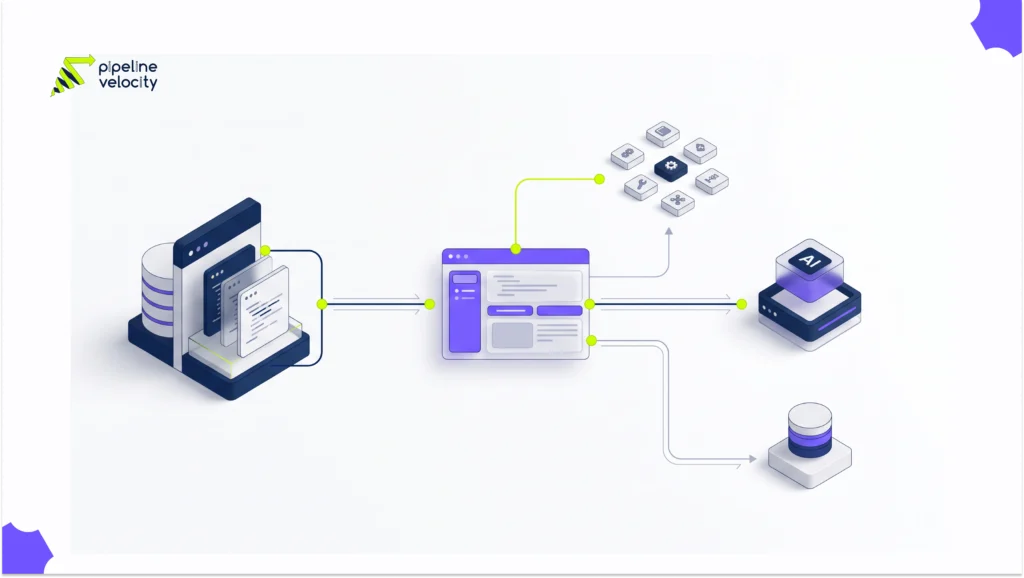
Write a task as an expected behavior with boundaries, not a broad request to improve the website. Clear inputs make both implementation and review more precise.
An illustrative task brief might read: repair the staging enquiry form so that a missing work email produces an accessible error message, valid records reach the test CRM, and the existing owner-assignment rule remains unchanged. Include the relevant page, files, sample records, and current failure.
Add these details:
1. The exact problem and how to reproduce it.
2. The expected result for valid and invalid cases.
3. The systems and files within scope.
4. The behavior that must remain unchanged.
5. The available tests and any known environment limitations.
6. The actions that require approval, including publishing or changing live data.
Avoid putting unrelated credentials or customer records into the task. Supply synthetic data when it is sufficient to reproduce the behavior. More context is helpful only when it is relevant and appropriate to share.
How Do You Check the Result?
Review the change and the evidence separately. A plausible code change may not solve the problem, while a passing test may cover the wrong expectation.
First compare the actual changes with the task’s boundaries. Investigate unrelated edits, changed configuration, or removed checks. Then reproduce the original failure and test a normal case. Inspect the destination system when the task involves data delivery.
GitHub’s Copilot cloud agent documentation describes work delivered through pull requests. That provides a review location; it does not remove the need to evaluate the changes and their results.
For a website release, ask a second person to perform the intended customer journey without guidance from the implementer. Record any checks blocked by missing access or unavailable services. Mark those as unverified rather than treating them as passed because the agent could not run them.
What If the Agent Says the Work Is Complete?
Treat the completion message as a report to inspect. It should name the checks performed and any remaining limitations. If it only says that the feature is ready, request the evidence or run the required checks yourself. Acceptance belongs to the release owner, including the decision to delay a release with unresolved failures.
What Should You Measure in a Pilot?
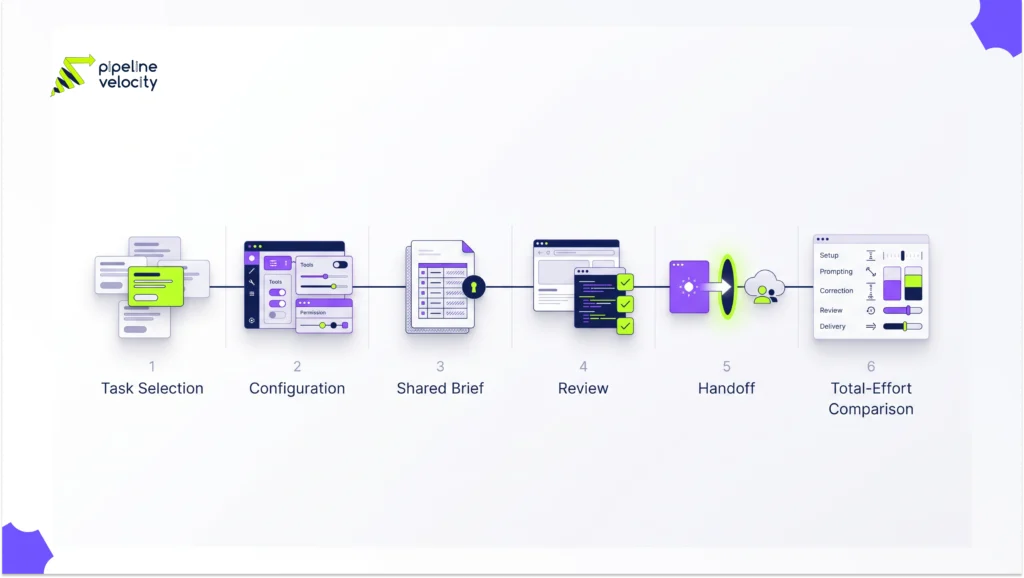
Measure total accepted-task effort, including setup, implementation, review, correction, and rework. Counting generated lines or completed prompts does not establish business value.
Use a small set of representative tasks with written acceptance criteria. Record which ones were accepted, how much reviewer involvement they required, and whether defects appeared after acceptance. Note differences in task complexity so that a simple component is not compared directly with a difficult integration.
Pipeline Velocity provides website design and development for business websites. A scoped pilot can establish where AI-assisted work fits your delivery process before you commit to wider adoption.
The useful outcome is a list of tasks your team can delegate reliably, the controls each requires, and the work that remains better handled directly. Expand the pilot only when the evidence supports it. Faster generation is worthwhile when it produces a result your team can confidently maintain.
FAQs
Is an AI Coding Agent the Same as Autocomplete?
An AI coding agent can perform a sequence of actions across a task, while autocomplete primarily suggests code as you work. The distinction depends on the tool and mode in use. Check whether the system can read relevant files, make changes, use tools, and report results, then assess the permissions around those actions.
Can an Agent Fix an Existing Website?
An agent can help investigate and change an existing website when it has suitable access and context. A useful task includes a reproducible problem, expected behavior, and a test environment. The resulting change still needs review, especially if it affects shared components, live integrations, customer information, or the site’s release configuration.
Can an AI Coding Agent Test Its Own Work?
An agent may run tests and inspect results when its tools allow it, but those checks need independent evaluation. A test can encode the same mistaken assumption as the implementation. Confirm that expected outcomes come from approved requirements and that the checks cover the relevant failure states, not only a successful demonstration.
Should an Agent Have Production Credentials?
Routine development work should use an isolated environment and only the access necessary for the task. Keep production credentials separate unless a specific, authorized workflow requires them. The business should understand what the agent can read or change and which actions need approval before enabling access to live systems.
Will an Agent Reduce Development Costs?
It may reduce effort on some tasks, but cost savings must be measured across the complete delivery process. Include setup, review, correction, model usage, and maintenance. Compare accepted work of similar complexity rather than assuming that a lower amount of manual typing produces a lower project cost or faster release.
What Is the Best First Task to Delegate?
A reproducible, low-impact issue with clear expected behavior is a useful first task. For example, repair a validation message in staging while preserving existing submission behavior. Avoid making a live migration or an unclear architectural change your first experiment. Start where the reviewer can determine success without relying on the agent’s explanation.
Conclusion
Choose a bounded task from the development queue and write its acceptance criteria before assigning it. Give the agent the context it needs, then assess the resulting change using evidence that the business understands.
Use a pilot to decide where delegation helps and where review becomes the limiting factor. If your team cannot independently evaluate the result, arrange a technical review before expanding the agent’s responsibilities or access.