


When BNI referrals do not convert, the chapter is rarely the only problem. Most conversion leaks happen between the referral request, the introduction and the first sales conversation. Fix the system by defining a qualified referral precisely, responding quickly, recording every outcome and giving the referring member useful feedback.
Key Takeaways
- Separate introductions, leads and qualified referrals before comparing conversion rates.
- Give members a one-sentence ideal referral brief with observable triggers and exclusions.
- Acknowledge the referrer immediately and contact the prospect within an agreed service level.
- Track acceptance, contact, meeting, proposal, win and loss stages, not just referral volume.
- Use one-to-one meetings to improve referral quality without blaming individual members.
- Review leading activities and downstream revenue together so accountability stays constructive.
What Counts as a Qualified BNI Referral?
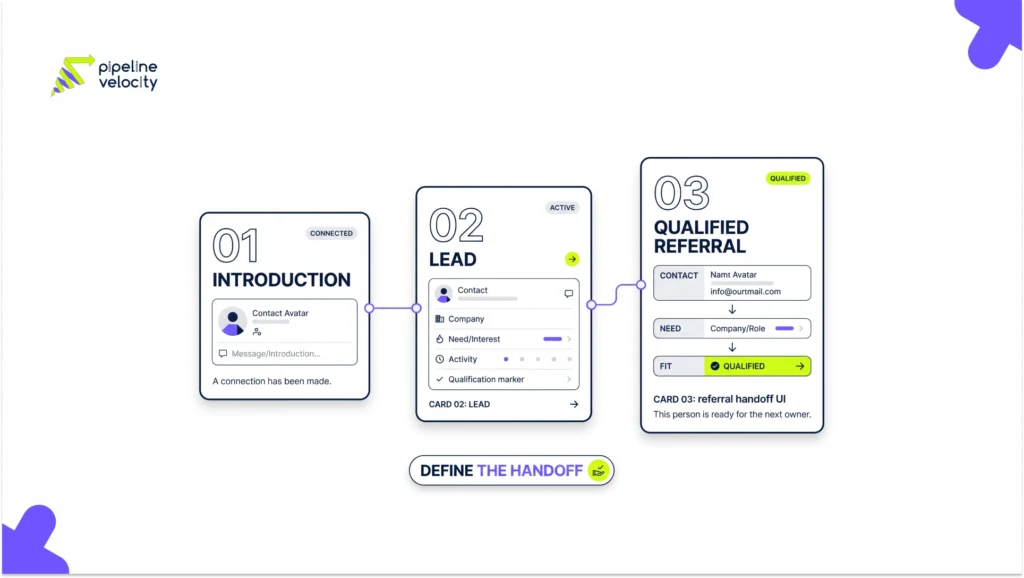
A qualified referral is a warm introduction to a person or company that matches your agreed customer criteria, has a relevant need or trigger, and expects you to make contact. A name without permission is a lead. A vague suggestion to call someone is an introduction opportunity. Treating all three as equal inflates the denominator and creates friction with members.
BNI describes its model as the exchange of qualified referrals, while its meeting guidance says members pass qualified referrals during the weekly agenda. That makes qualification a shared responsibility before the handoff, not a label applied after a salesperson rejects the lead.
| Handoff type | Minimum evidence | Correct next action |
| Introduction | Relevant person identified | Ask the member to secure permission |
| Lead | Contact and possible need known | Research and qualify before forecasting |
| Qualified referral | Fit, trigger and permission confirmed | Contact promptly and acknowledge referrer |
If you are new to the format, first review how BNI works, its cost and its referral structure. This article focuses on the operating system after members begin exchanging opportunities.
Why Are Your BNI Referrals Not Converting?
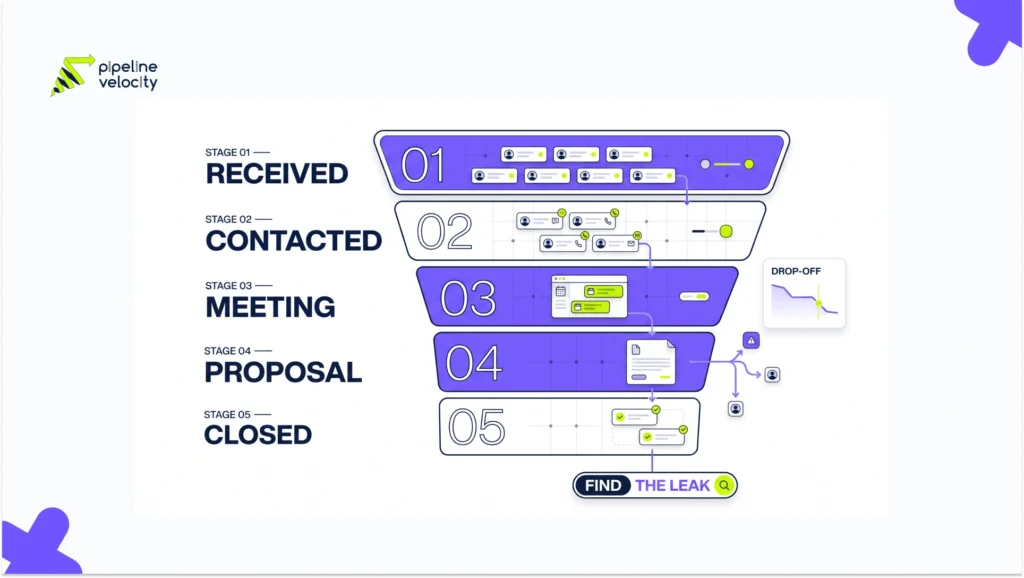
The fastest diagnosis is to locate the stage where referrals stop moving.
- Low acceptance usually means the request is too broad or the target profile is unclear.
- Low contact rates point to missing permission, wrong details or slow outreach.
- Low meeting rates suggest weak relevance, poor positioning or an awkward handoff.
- Low proposal rates expose discovery or solution-fit problems.
- Low win rates may reflect pricing, proof, competition or sales execution.
Do not ask, “Why are BNI leads bad?” Ask, “At which stage does movement fall below our normal channel benchmark?” A referral channel can provide strong meetings yet appear weak when the business compares it only with closed revenue. Conversely, a large referral count can hide poor qualification.
How Do You Improve Referral Qualification?
Create a referral brief that another member can recognize during a real conversation. Include the target company or person, the trigger, the problem you solve, one disqualifier and the exact introduction request.
“Any business that needs marketing” is not actionable. “Founder-led B2B service companies with inconsistent pipeline, no senior marketing owner and a growth target for the next two quarters” gives members observable signals. A member can then ask whether an introduction would be welcome.
Use your weekly presentation to teach one trigger at a time. During one-to-one meetings, share three recent wins, three poor-fit examples and the questions a member can safely ask. BNI’s guidance on what happens at a meeting emphasizes the structured exchange of qualified referrals. Your brief makes that structure usable.
For a broader acquisition system, align the referral brief with the same ideal-customer and pipeline definitions used by your fractional CMO or growth leadership. Otherwise, networking, paid media and outbound teams may qualify the same buyer differently.
What Follow-Up Process Should You Use?
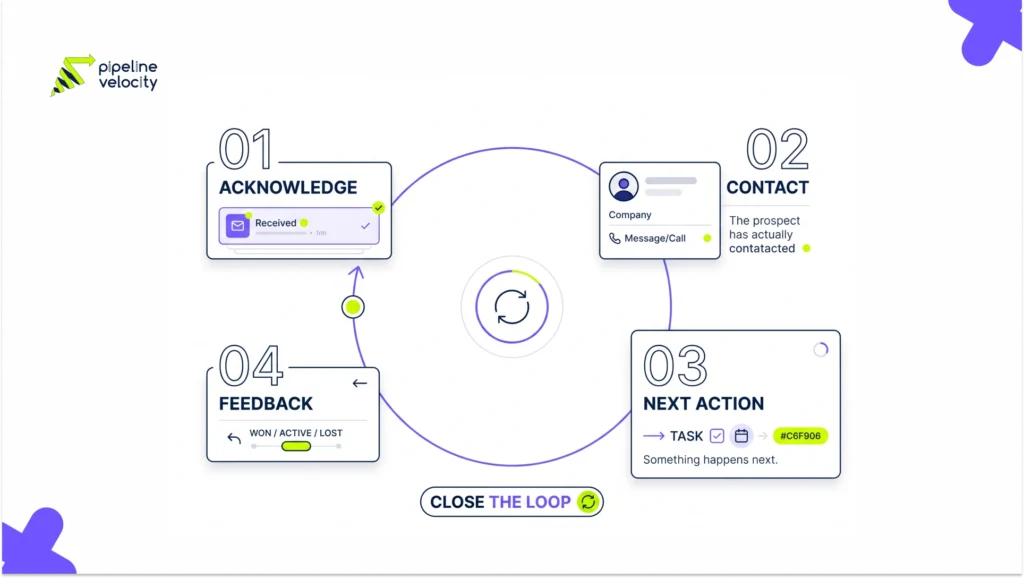
Fast follow-up signals respect for both the prospect and the member who transferred trust. Set a simple service level: acknowledge the referrer the same business day, contact the prospect within one business day, and log the next action immediately. If the introduction arrives outside working hours, state when you will respond.
Use the warm context in the first message. Mention the referring member, the business trigger and the expected benefit. Do not send a generic sales sequence that makes the introduction feel cold.
BNI’s follow-up guidance recommends prioritizing referral follow-up, using multiple channels when appropriate and providing feedback to the referring member. A practical sequence is:
- Thank the member and confirm receipt.
- Reply in the introduction thread when possible.
- Offer a specific next step with two scheduling options.
- Make a second attempt through an appropriate channel.
- Return the referral for clarification if permission or fit is missing.
- Close the loop when the opportunity advances, pauses or ends.
Automation can create reminders, but it should not remove the human context that makes referral marketing valuable. If broader lead handling is inconsistent, a growth marketing partner can help connect referral activity to CRM stages and revenue reporting.
How Should Members Close the Feedback Loop?
Feedback should improve the next referral. Tell the member whether you made contact, whether the buyer matched the brief, what happened next and what signal would make a future introduction stronger. Protect confidential commercial details.
Use neutral language. “The company is below our minimum project size, so next time listen for a multi-location rollout” is actionable. “This was a bad lead” teaches nothing and discourages future introductions.
| Feedback moment | Share | Avoid |
| Receipt | Contact plan and timing | Silence |
| Qualification | Fit outcome and useful signal | Blame or private buyer details |
| Progress | Meeting, proposal or nurture status | Premature revenue claims |
| Closure | Win, loss or no-decision reason | Disappearing after the handoff |
One-to-one meetings are the right place to review patterns and rehearse the referral brief. Chapter leadership can support consistent habits, but each business still owns its response time, CRM hygiene and sales quality.
Which Metrics Reveal the Real Bottleneck?
Track a small funnel for every BNI referral: received, accepted, contacted, connected, meeting held, proposal sent and closed. Add source member, referral type, response time, estimated value, result and loss reason.
Calculate stage conversion rates as well as total revenue. Also track median time to first response and the percentage of outcomes shared with the referrer. BNI Connect may support chapter activity and outcome tracking, but your CRM should remain the operating record for sales stages and attribution.
Judge the channel over a meaningful period. A high-value service may have a longer buying cycle than a local transactional service. Compare BNI referrals with similar warm-introduction channels rather than paid clicks or anonymous website visits.
What Should Your 30-Day Reset Look Like?
In week one, audit the last 20 referrals and classify each handoff accurately. Find the weakest stage and list the top three failure reasons.
In week two, rewrite the referral brief and test it with two trusted members. Ask them to repeat it in their own words. If they cannot, simplify it.
In week three, implement response-time rules, CRM stages and a feedback template. Review every open referral and close stale loops.
In week four, hold focused one-to-one meetings with the members closest to your ideal customer. Share examples, not a catalogue of services. Review the funnel after another 30 days before changing the offer or declaring the channel ineffective.
FAQs About BNI Referrals
How Quickly Should I Contact a BNI Referral?
Contact the prospect within one business day unless the referrer specifies another time. Acknowledge the member immediately so they know the introduction is being handled.
What Is a Qualified BNI Referral?
It is a warm introduction where fit, a relevant need or trigger, contact permission and an expected next step are reasonably clear.
Should I Put Every BNI Lead in My CRM?
Yes, but label the handoff type correctly. Keep introductions, leads and qualified referrals distinct so conversion reporting remains meaningful.
How Many Times Should I Follow Up?
Use a short, respectful sequence across suitable channels, then ask the member for context or close the loop. The exact number depends on urgency, permission and your sales cycle.
What If a Member Keeps Sending Poor-Fit Referrals?
Schedule a one-to-one, show recent examples and revise the referral brief together. Focus on observable qualification signals rather than criticizing the member.
How Do I Measure BNI Referral Conversion?
Divide the number advancing to each stage by the number entering that stage. Report response time, meeting rate, proposal rate, win rate, revenue and feedback completion.
Should Chapter Leadership Enforce Referral Quality?
Leadership can reinforce education and accountability, but the receiving business must define fit clearly and follow up professionally. Quality is a shared system.
Conclusion
BNI referrals convert when members know what to listen for and the receiving business protects the transferred trust. Define qualification, respond on time, record stage movement and return useful feedback. If the numbers still lag, the funnel will show whether to improve the ask, the handoff, discovery, the offer or sales execution.