

Introduction
Most businesses do not have a lead problem. They have a direction problem. You might be launching Google Ads, posting on LinkedIn every day, publishing content, running several email campaigns, but still struggle to create revenue. 61% of marketers struggle with lead generation, while 25% struggle to measure conversion rates for brands.
After all, not every lead converts into a sale for your business. This is why the focus should be more on stronger marketing strategies. The right marketing strategy will support your business growth. Tactics are just a way of executing the plan.
Businesses that understand this difference build sustainable growth. Most of them rely on hiring a fractional CMO by Pipeline Velocity for the best results.
This guide will give you a clear picture of both terms and how they work together to fuel growth in modern businesses.
What is a Marketing Strategy?
A marketing strategy is the long-term direction behind your marketing efforts.
It defines:
- Who do you want to target?
- What position do you want to own in the market?
- Why customers should choose you.
- Which channels deserve investment?
- How marketing supports business growth.
A strategy is not a list of activities. It is a complete decision-making framework. For example, a B2B SaaS company may decide its strategy is to dominate mid-market healthcare businesses by positioning itself as the fastest implementation platform in the industry.
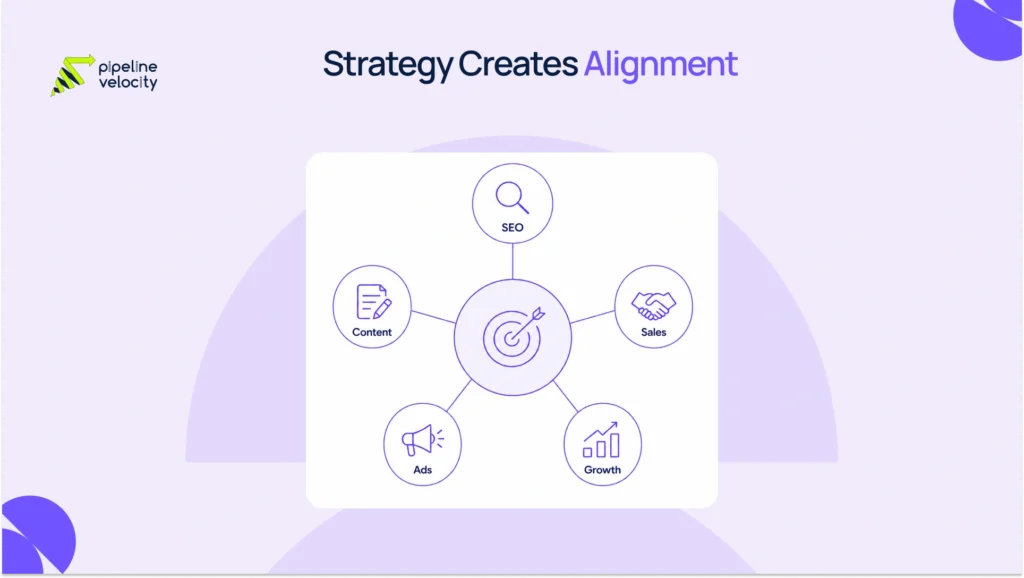
That strategic direction influences:
- Messaging
- Content
- Paid advertising
- Sales enablement
- Website positioning
- SEO priorities
- Customer experience
Without a strategy, teams usually jump from one marketing trend to another without understanding whether those actions actually support business goals.
What Are Marketing Tactics?
Marketing tactics are the individual actions used to execute a strategy.
These are things like:
- SEO campaigns
- Paid advertising
- Email marketing
- Social media posting
- Webinar campaigns
- Lead magnets
- Landing pages
- LinkedIn outreach
- Blog publishing
Tactics are important; they create execution. But tactics without strategy often create random marketing.
For example, running Google Ads, publishing weekly blog posts, posting daily on LinkedIn, and launching an email sequence are tactics.
None of these activities automatically guarantees growth. Their effectiveness depends entirely on the strategy guiding them. Thus, two companies can use the exact same tactics and get completely different outcomes.
Marketing Strategy vs Tactics
The easiest way to understand marketing strategy vs tactics is this: Strategy defines the destination. Tactics define the route.
A strategy answers:
- Where are we going?
- Why are we going there?
- What competitive advantage are we building?
Tactics answer:
- What actions will we take?
- Which channels will we use?
- How will we execute the plan?
Here is a simple example.
Goal: Increase enterprise-level inbound revenue.
Strategy: Position the company as a trusted authority for complex enterprise growth challenges.
Tactics:
- Publish high-intent SEO content.
- Run LinkedIn thought leadership campaigns.
- Create enterprise-focused case studies.
- Launch account-based email campaigns.
- Optimize landing pages for conversion.
The strategy creates alignment. The tactics deliver execution. When businesses skip strategy, tactics become disconnected. That usually leads to inconsistent messaging, poor lead quality, rising acquisition costs, and weak conversion rates.
Why “More Leads” is Not a Strategy?
This is one of the most common mistakes businesses make. “More leads” is an outcome, not a strategy.
A strategy explains:
- Which leads matter.
- Why should those leads trust your brand?
- Which positioning attracts higher-quality buyers?
- Which channels generate long-term growth?
- How marketing supports revenue goals.
Without those answers, businesses often attract the wrong audience.
This creates several problems:
- Low-quality leads.
- Poor sales conversions.
- High customer acquisition costs.
- Misaligned marketing campaigns.
- Revenue inconsistency.
Many companies become obsessed with lead volume instead of lead quality.
But growth rarely comes from generating the most leads. It comes from attracting the right buyers with the right messaging at the right stage of the customer journey.
That requires strategic thinking.
This is exactly why many growing businesses work with a fractional CMO service rather than relying solely on campaign execution. Strategic leadership helps businesses connect marketing activities directly to revenue outcomes.
Common Signs Your Marketing Is Tactic-Driven
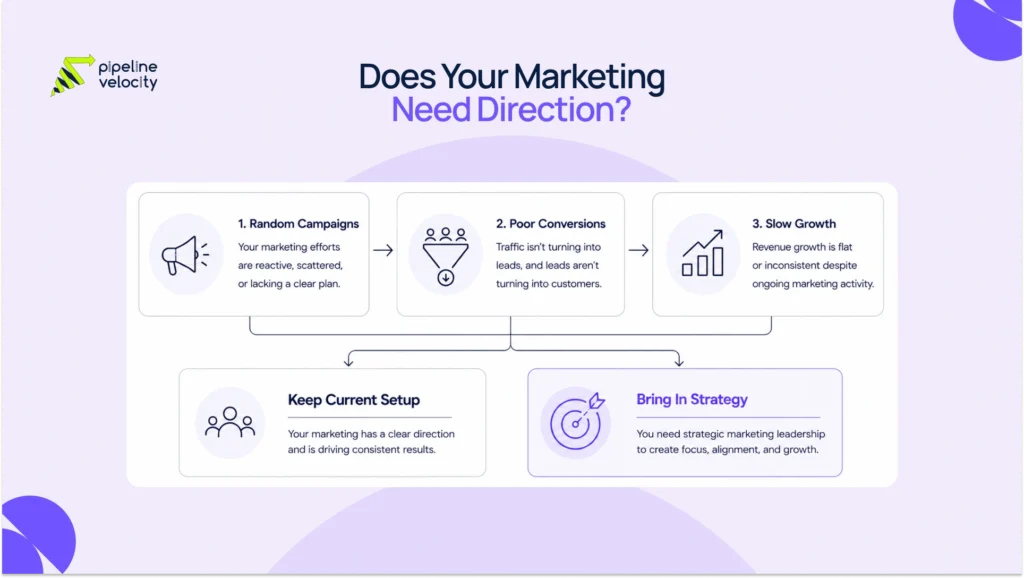
Many companies believe they have a strategy when they actually have a collection of marketing activities.
Here are some common signs:
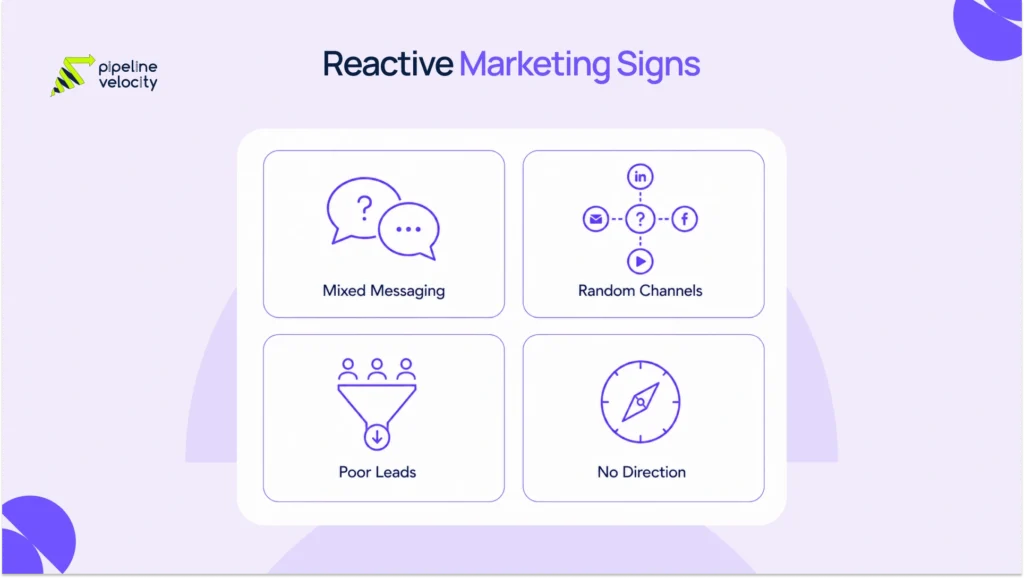
- You Keep Changing Marketing Channels Constantly
One month, it is SEO. The next month, it will be paid ads. Then webinars. Then influencer partnerships. There is no consistency because there is no clear strategic direction.
- Your Messaging Changes Frequently
Your homepage says one thing. Ads say another. Sales pitches sound completely different. This confuses buyers and weakens brand positioning.
- Marketing And Sales Are Misaligned
Marketing focuses on lead quantity. Sales wants better-qualified opportunities. Without a strategy, both teams operate with different priorities.
- You Measure Activity More Than Business Impact
Businesses often celebrate:
- Website traffic.
- Social impressions.
- Click-through rates.
But struggle to connect those metrics to revenue growth.
- Every Marketing Decision Feels Reactive
Competitors launch something new, and suddenly your team shifts priorities. Strong strategy prevents reactive marketing.
How Strategy and Tactics Should Work Together?
The best marketing systems combine both strategy and tactics. Strategy without tactics creates ideas without execution. Tactics without strategy create noise without direction.
Successful businesses create alignment between:
- Business goals
- Marketing positioning
- Customer pain points
- Channel selection
- Sales enablement
- Content strategy
- Conversion optimization
For example, if a company’s strategy is to become a trusted authority in its industry, then tactics should support that positioning consistently.
That may include:
- Educational SEO content
- Thought leadership articles
- Industry webinars
- Case studies
- Strategic email nurturing
Everything works together. That consistency compounds over time.
Business Examples Of Strategy vs Tactics
- Example 1: SEO
Tactic: Publishing blog content twice a week.
Strategy: Building long-term organic authority around high-intent industry keywords that drive qualified pipeline opportunities.
Result: The tactic is content publishing. The strategy is market visibility and authority.
- Example 2: Paid Advertising
Tactic: Running Google Ads campaigns.
Strategy: Capturing high-intent buyers searching for solutions during active purchase stages.
Result: Again, the tactic is the ad campaign. The strategy is buyer acquisition during decision-making moments.
- Example 3: Email Marketing
Tactic: Sending weekly newsletters.
Strategy: Nurturing prospects over time to improve trust, retention, and sales readiness.
Result: The difference may sound subtle, but it changes how campaigns are built and measured.
Why Businesses Work With Pipeline Velocity?
Many businesses invest in marketing consistently, yet still struggle to achieve predictable growth. Campaigns run, leads come in, and content gets published, yet revenue feels inconsistent. In most cases, the problem is not effort. It is the absence of a clear strategy that connects all those marketing activities.
Pipeline Velocity helps businesses create clarity and momentum through a structured growth approach.
Our team supports businesses with:
- Strategic marketing direction through comprehensive fractional CMO services, aligning your marketing with your revenue goals.
- SEO and organic growth strategies that focus on your brand’s long-term visibility instead of just building short-term traffic spikes.
- Performance marketing campaigns that are carefully designed to attract high-intent leads and improve acquisition efficiency.
- Email marketing strategies to help nurture better prospects and strengthen customer relationships.
- Conversion-focused website designs and development that improve overall user experience and increase lead generation.
- Growth marketing systems that connect your brand positioning, messaging, content, and sales alignment together.
Instead of randomly chasing tactics online, go for a fractional CMO service by Pipeline Velocity. We help businesses build a solid, scalable marketing foundation that drives sustainable growth and revenue.
Instead of chasing random tactics, Pipeline Velocity helps businesses build a scalable marketing foundation that supports sustainable growth over time.
FAQs
What is the difference between marketing strategy and tactics?
Your marketing strategy is focused on building long-term direction. Marketing tactics, on the other hand, are the particular actions that are required to execute the strategies.
Why is strategy more important than tactics?
Strategy actually helps to build the much-needed alignment and direction. Without the right strategy, your tactics may often become disconnected, resulting in poor outcomes.
Can marketing tactics work without a strategy?
Tactics will generate short-term activity in your business. But you can achieve sustainable growth only through a clear strategic foundation.
Is SEO a strategy or a tactic?
SEO itself is generally considered a tactic. The broader strategy would define why SEO matters and how it supports business growth goals.
Why do businesses confuse strategy and tactics?
Because tactics are easier to see and measure, businesses often mistake marketing activity for strategic progress.
What comes first, strategy or tactics?
Strategy should always come first. Once strategic goals are clear, tactics can be selected to support those objectives.
How does a fractional CMO help with strategy?
A fractional CMO helps businesses align marketing decisions with revenue goals, improve positioning, prioritize growth opportunities, and build scalable marketing systems.
Conclusion
Marketing success rarely comes from doing more random activities. It comes from creating clarity. Businesses need to strike the right balance when choosing between marketing strategies and tactics.
The focus should be on building systems that actually support long-term growth. And the ideal way to do this is to choose the Momentum Package by Pipeline Velocity. Our fractional CMO services ensure that your business has the right structure, which fuels sustainable growth in the upcoming years.
Key Takeaways:
- Your marketing strategy is focused on building long-term growth. Your tactics are individual actions that support this vision.
- Lead quantity is not useful without strong positioning, audience targeting, and conversion systems. The focus should be more on strategic clarity and not just marketing volume.
- Avoid jumping between multiple channels and campaigns. Bring strategic alignment for better consistency across messaging, channels, and customer experience.
- The best marketing systems are directed towards growing your revenue, customer acquisition, and retention goals. Your marketing strategy should not be separate from your overall business strategy.
- As businesses scale further, marketing complexity may increase. In such cases, strategic oversight is crucial for prioritizing the right opportunities, reducing expenditure, and building sustainable momentum.