

You are already publishing multiple blogs at the right schedules. But still, you see no improvement in the rankings. So many hours spent researching topics, curating content, optimizing keywords, and even sharing it online take a lot of time and effort. Yet, your competitors rank higher here.
The problem usually is not effort. It is structured. Ranking #1 on Google drives roughly 27% of total clicks by improving their search engine optimization strategies.
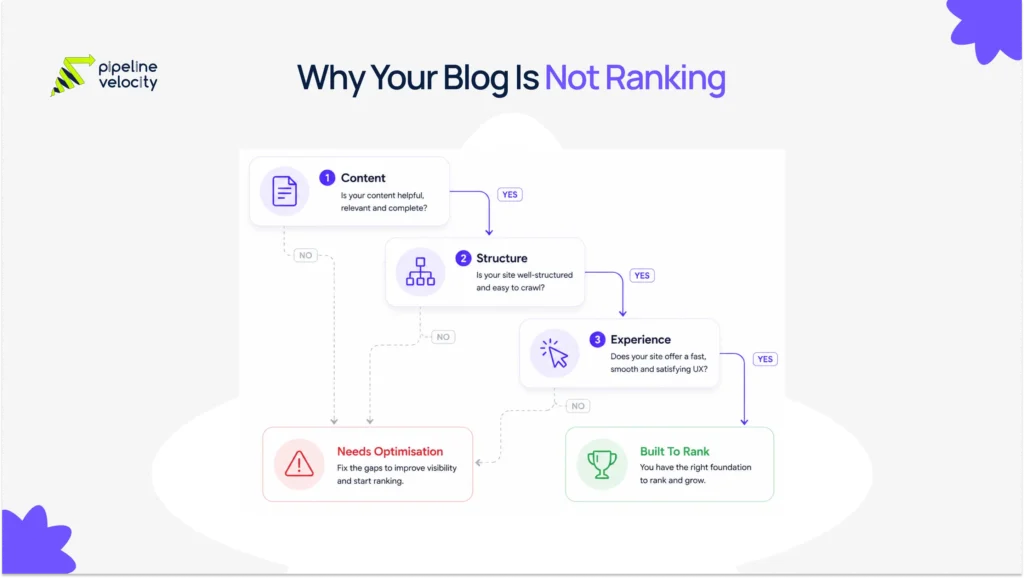
Many blogs fail because their content foundation is weak. Search engines today are smarter than ever. They do not just scan for keywords anymore. They focus more on improving the user experience, content depth, intent matching, internal linking protocols, website authority, and content quality signals.
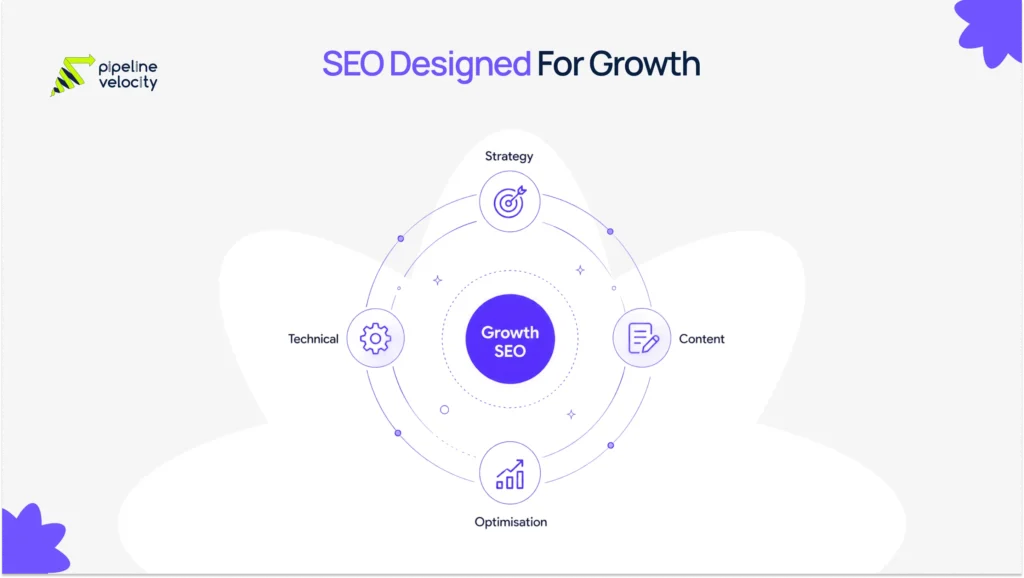
Thus, most brands nowadays invest in search engine ranking optimization services through Pipeline Velocity. With the right strategies, you can transform your entire content rankings very soon.
If you have been searching for answers to “why my blog is not ranking,” this guide will surely help you identify the real issues and show you how to fix everything strategically.
Why Blog Rankings Depend On Structure?
Google’s ranking systems are built to reward content that provides the best overall experience to users. That includes relevance, trustworthiness, readability, navigation, engagement, and technical performance.
Many businesses focus only on publishing frequency. But without a proper SEO framework, blogs become isolated pages with little authority or visibility.
This is where strategic SEO becomes so important. With a structured SEO approach, search engines will analyze and understand your website more effectively. It carefully connects your related content and establishes your brand expertise within a niche.
If you are focusing on growth marketing, a well-structured SEO is a long-term investment. Not just any content publishing strategy.
Problem #1: Weak Search Intent Alignment
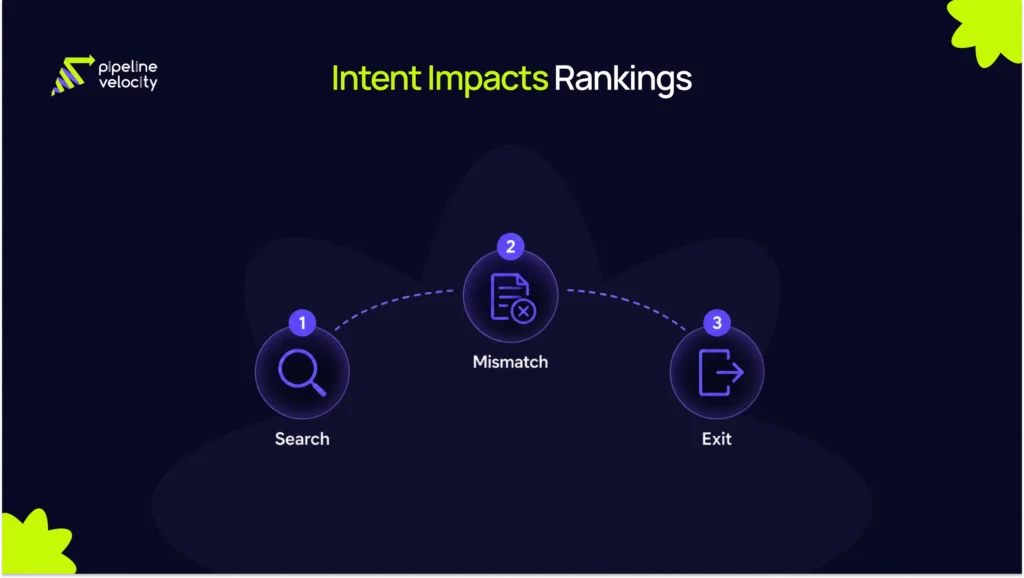
One of the biggest reasons so many blogs fail to rank is that the content does not match what users actually want. Search intent matters more than keyword density. For example, someone searching “why my blog is not ranking” is likely looking for:
- Practical reasons behind poor rankings
- SEO mistakes
- Actionable fixes
- Performance improvement strategies
If your blog only explains what SEO is, Google sees a mismatch between the query and the content.
Common Intent Mistakes
- Writing informational content for commercial keywords
- Creating surface-level articles
- Ignoring competitor content structure
- Targeting keywords without understanding user goals
How To Fix It?
Before writing any blog:
- Analyze the top-ranking pages.
- Identify what format Google prefers.
- Understand whether users want guides, lists, comparisons, or tutorials.
- Include examples and actionable insights.
Intent matching improves engagement signals, increases dwell time, and strengthens rankings over time.
Problem #2: Poor Content Architecture
A blog without any proper structure confuses both users and search engines.
If your blog headings are inconsistent, sections are scattered randomly, and ideas are disconnected throughout, your readers are bound to leave the website right away. Even search engines will struggle to assess the blog’s topical relevance.
Signs Of Weak Content Structure
- Long blocks of text
- No logical heading hierarchy
- Missing table of contents
- Repetitive sections
- No clear content flow
How To Fix It?
Build your content like a roadmap. Use:
- Clear H2 and H3 headings
- Short paragraphs
- Logical section progression
- Supporting examples
- FAQ sections
- Internal navigation
A strong structure rapidly increases the overall chances of earning more featured snippets and AI-generated search visibility.
Problem #3: Thin Or Generic Content
Thousands of blogs are currently repeating the same advice without adding anything valuable. Google always rewards content that demonstrates more experience, expertise, authority, and trust over generic content.
Examples Of Thin Content
- Short articles with little depth
- AI-generated sounding paragraphs
- Keyword stuffing
- Overuse of vague statements
- No original perspective
How To Fix It?
Focus on depth and usefulness. Instead of writing broad statements, include:
- Real-world scenarios
- Specific strategies
- Step-by-step recommendations
- Industry insights
- Updated SEO practices
Adding unique viewpoints helps differentiate your content from competitors. You should also regularly refresh old content. Updating statistics, examples, and SEO strategies signals freshness to search engines.
Problem #4: Weak Internal Linking Strategy
Internal linking is one of the most overlooked SEO opportunities. Many blogs are published and then forgotten without being connected to related pages or service offerings. This weakens the distribution of authority across the site.
Why Internal Linking Matters
Internal links help:
- Search engines crawl pages
- Establish topical relationships
- Pass authority between pages
- Improve user navigation
- Increase session duration
Without internal linking, even strong blogs can remain isolated from the rest of the website.
How To Fix It?
Every blog should connect naturally to:
- Related blog articles
- Relevant service pages
- Pillar content
- Case studies
- Conversion-focused landing pages
For example, if your blog discusses SEO growth challenges, linking to a dedicated SEO service page creates stronger topical relevance. You can also explore additional growth strategies through Pipeline Velocity’s Growth Marketing Services.
Problem #5: Technical SEO Issues
Sometimes the content itself is not the problem. Technical SEO issues quietly prevent blogs from ranking even when the writing is strong.
Common Technical Problems
- Slow page speed
- Poor mobile responsiveness
- Broken links
- Crawl errors
- Duplicate content
- Missing meta tags
- Incorrect indexing settings
Even a few technical issues can significantly reduce visibility.
How To Fix It?
Run regular technical SEO audits using tools like:
- Google Search Console
- Screaming Frog
- Ahrefs
- SEMrush
Pay close attention to:
- Core Web Vitals
- Mobile usability
- Structured data
- XML sitemaps
- Canonical tags
Technical SEO lays the foundation that enables content to perform well in search results. Google’s own Page Experience Documentation explains how usability and performance influence visibility.
Problem #6: No Topical Authority
Publishing random blogs across unrelated topics weakens your authority signals. Search engines prefer websites that consistently demonstrate expertise within a specific niche.
If your site covers marketing today, fitness tomorrow, and cryptocurrency next week, Google struggles to understand your core expertise.
What Is Topical Authority?
Topical authority means becoming a trusted source around a specific subject area. For example, an SEO-focused website should consistently publish content around:
- Technical SEO
- Keyword strategy
- Link building
- Content optimization
- Search intent
- Conversion-focused SEO
Over time, this creates a connected ecosystem of expertise.
How To Fix It?
Build topic clusters rather than isolated blog posts. Create:
- Pillar pages
- Supporting blogs
- Interconnected content
- Deep niche coverage
Consistency matters more than volume. Ten strategically connected blogs often outperform fifty random articles.
Problem #7: Ignoring User Experience Signals
Google tracks how users interact with your content. If visitors land on your blog and leave immediately, it signals dissatisfaction. Poor user engagement can weaken rankings over time.
UX Signals That Affect Rankings
- Bounce rate
- Time on page
- Click-through rate
- Mobile experience
- Navigation quality
- Readability
How To Fix It?
Improve the overall reading experience. Use:
- Clear formatting
- Conversational writing
- Fast-loading pages
- Mobile-friendly layouts
- Relevant visuals where appropriate
- Strong introductions
- Helpful CTAs
Most importantly, write for humans first. Content that feels robotic or overly optimized often quickly loses readers’ trust. A conversational yet professional tone keeps users engaged longer and encourages deeper interaction with your website.
How Pipeline Velocity Helps Fix These Ranking Problems?
Most businesses do not struggle because they lack content. They struggle because they lack direction, structure, and a clear SEO growth strategy. That is where Pipeline Velocity takes a different approach.
Instead of focusing on vanity metrics or random traffic spikes, their team builds SEO systems designed around real business growth. From technical SEO fixes and keyword strategy to conversion-focused content and performance tracking, every part of the process is built to improve visibility while supporting pipeline growth.
Their approach combines:
- Technical SEO optimization that will improve your website’s crawlability, overall site, and marketing performance.
- Intent-driven content strategies that target a specific range of audiences only.
- Internal linking and site architecture improvements to ensure that users enjoy a smooth interface when scrolling through your website.
- Conversion-focused SEO campaigns that are always aligned to your business goals.
- Long-term organic growth strategies instead of short-term ranking tricks for a more sustainable growth approach.
What makes our process feel different is the practical execution behind it. The focus is not just on publishing more blogs. It is about creating content ecosystems that attract the right audience and turn organic traffic into leads and revenue.
For businesses that already publish content but struggle to achieve meaningful rankings or conversions, our SEO growth services help bridge the gap between visibility and business impact.
FAQs
Why is my blog not ranking even after using keywords?
Search engines are now designed to evaluate intent, structure, authority, technical SEO, and user engagement all together.
How long does it take for a blog to rank?
It ultimately depends on competition and domain authority. Your blogs may take several weeks to several months to rank.
Does blog length affect rankings?
Length alone does not really guarantee rankings. The focus should be on depth, relevance, and usefulness more than just the word count.
Can technical SEO stop my blog from ranking?
Yes. Many websites struggle with crawl issues, slow speed, poor mobile performance, and indexing errors. All of these can negatively impact your website rankings.
How important are internal links for SEO?
Internal links are extremely important in your blogs. They help distribute authority, improve overall navigation, and strengthen topical relevance.
Should I update old blog content?
Absolutely. Updating all your outdated blog posts boosts freshness signals and can significantly boost rankings.
Why do competitors rank higher with simpler content?
Often, this is because their content better matches the accurate search intent. It has stronger authority signals and even offers a better user experience.
Conclusion
If your content is not ranking right now, you need to dig deeper to understand the issue. Instead of focusing only on keywords, focus more on improving search visibility. Here, the focus shifts primarily to structure, strategy, technical performance, authority, user experience, and other such factors. All of these, working together with a consistent posting schedule, are bound to improve your search engine rankings in no time.
Hence, you should invest in Growth Velocity’s Growth Package at this point. It is specifically designed to improve your search rankings and bring more inbound traffic to your website over time. Pipeline Velocity’s best-structured SEO campaigns ensure that your content and technical aspects are always optimized to your business needs.
Key Takeaways:
- Understanding what users truly want from your brand surely helps your content better match search expectations. Matching intent as a part of your strategy improves engagement and increases ranking potential.
- You need to have a well-organized blog. This actually helps users navigate information easily while helping search engines understand your topic hierarchy.
- Even high-quality content may fail if you have crawl issues on your website. Also, slow performance or not being mobile-friendly can make the entire experience drop off.
- Maintain a regular content publishing schedule. Consistently publishing connected content within your niche will gradually build trust and improve visibility for related keywords.
- Focusing more on generating readable, engaging, and user-focused content. This actively encourages visitors to stay longer, interact more, and effectively signal quality to search engines.